Indigo Airline Walk-In Interviews
- 29. Sep, 2026
Gulf Air Now Hiring Female
- 29. Sep, 2026
Singapore Airlines Is Hiring Customer
- 29. Sep, 2026


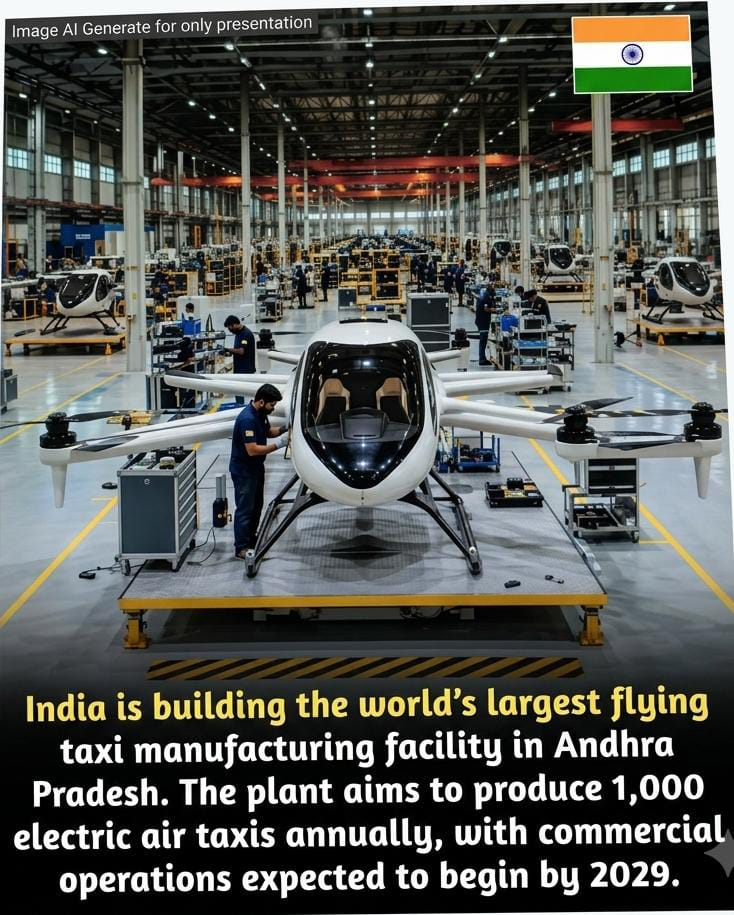
The future of transportation is taking off, and *India is positioning itself as a global leader in electric aviation. A massive *flying taxi manufacturing facility is being established in Andhra Pradesh, marking a significant milestone in the country’s aerospace and advanced mobility sector.
Once operational, the plant is expected to manufacture *1,000 electric flying taxis (eVTOL aircraft) every year, making it one of the largest facilities of its kind in the world. Commercial air taxi services are expected to begin by *2029, bringing India closer to a new era of sustainable urban transportation.
Flying taxis, also known as Electric Vertical Take-Off and Landing (eVTOL) aircraft, are battery-powered aircraft designed to transport passengers over short distances.
Unlike helicopters, eVTOLs offer several advantages:
These aircraft can take off and land vertically, making them ideal for congested metropolitan areas where traditional transportation often faces delays.
Andhra Pradesh has emerged as an attractive destination for aerospace manufacturing due to:
The state’s investment-friendly policies are helping attract cutting-edge aviation projects that can create thousands of high-skilled jobs.
The establishment of this manufacturing facility could have a lasting impact on India’s aviation sector by:
As urban populations continue to grow, air mobility solutions could become an essential part of future transportation networks.
Electric flying taxis align with global sustainability goals by offering cleaner alternatives to conventional transport.
Potential benefits include:
As battery technology advances, electric air taxis are expected to become even more efficient and economically viable.
While the future looks promising, several challenges remain before commercial operations become widespread:
Addressing these challenges will be essential for successful large-scale deployment.
Industry experts believe that the coming years will witness rapid progress in urban air mobility. If development proceeds as planned, India’s first commercial flying taxi services could transform the way people commute within and between cities.
This ambitious project reflects India’s growing capability in advanced aerospace manufacturing and reinforces its vision of becoming a global innovation hub.
India’s proposed flying taxi manufacturing facility in Andhra Pradesh represents far more than just another industrial project. It symbolizes the country’s ambition to lead the next generation of aviation technology. With the potential to manufacture 1,000 electric air taxis annually, the initiative could redefine urban transportation, generate high-value employment, and place India among the world’s leading eVTOL manufacturing nations.
As commercial operations approach the targeted 2029 launch, the world will be watching India’s journey toward a cleaner, smarter, and more connected future of aviation.