Indigo Airline Walk-In Interviews
- 29. Sep, 2026
Gulf Air Now Hiring Female
- 29. Sep, 2026
Singapore Airlines Is Hiring Customer
- 29. Sep, 2026


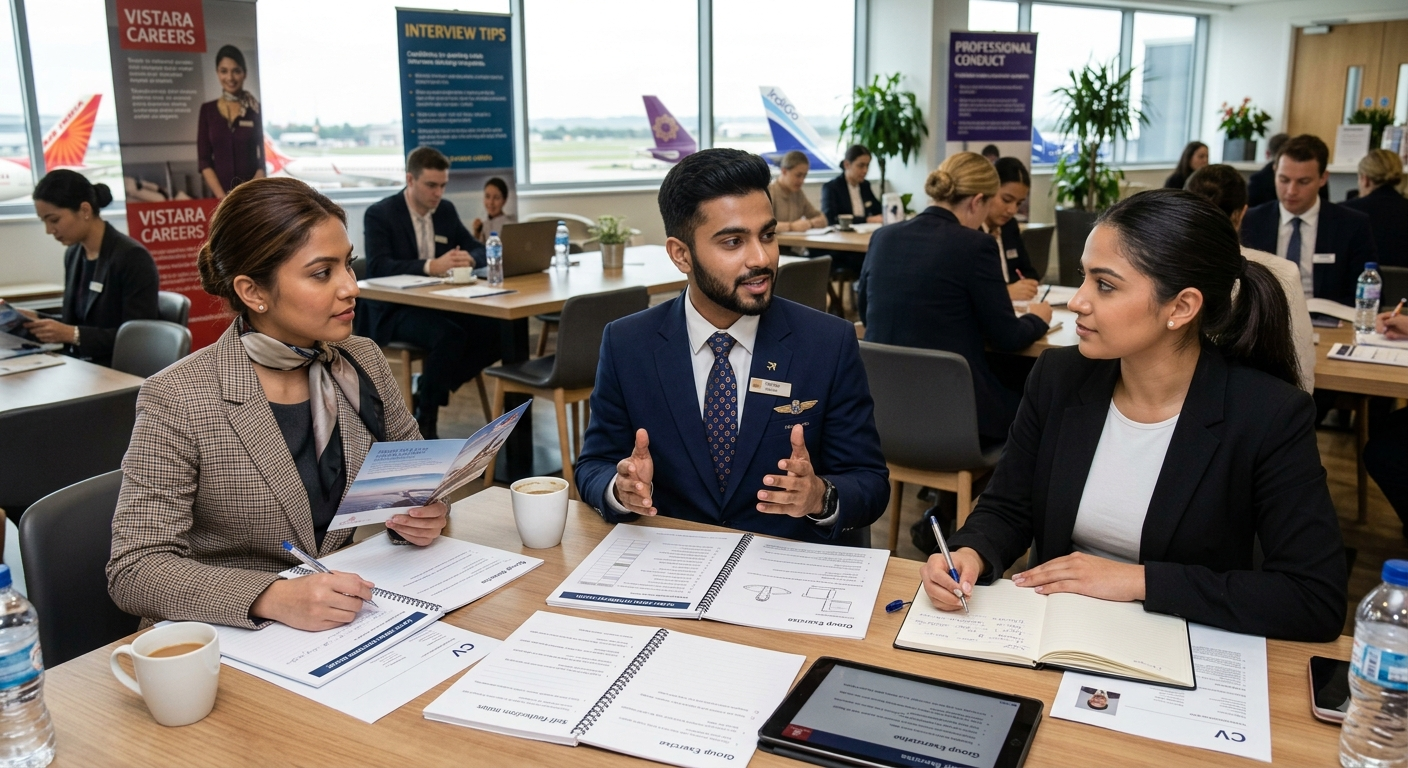
If you dream of becoming a cabin crew member or flight attendant, clearing the airline interview is one of the most important steps in your journey. Airlines look beyond academic qualifications—they evaluate your communication skills, confidence, personality, grooming, customer-service attitude, and ability to handle difficult situations.
Whether you are a fresher attending your first cabin crew interview or someone preparing for another opportunity, proper cabin crew interview preparation can significantly improve your confidence and performance.
In this guide, we will cover the most important areas you should prepare before attending a cabin crew interview.
A cabin crew interview is not simply about answering questions correctly. Recruiters want to understand whether you have the personality and skills required to represent an airline and take care of passengers in different situations.
During the selection process, interviewers may assess:
Good preparation helps you answer questions naturally instead of memorising answers.
Communication is one of the most important skills for cabin crew members.
You should be comfortable speaking clearly and confidently with passengers, colleagues, and senior crew members.
Practice:
You do not need to speak complicated English. Clear, confident, and polite communication is much more important.
“Tell me about yourself” is one of the most common questions asked during cabin crew interviews.
Your introduction should be short, professional, and relevant to the position.
A good introduction can include:
Avoid giving your entire life story. Keep your introduction focused on information that makes you suitable for the role.
Before attending an airline interview, research the company thoroughly.
Learn about:
You should be able to answer questions such as:
“Why do you want to join our airline?”
A generic answer such as “Because it is a famous airline” is unlikely to make a strong impression.
Instead, explain what attracts you to the airline and how your skills and career goals align with the organization.
Preparing for frequently asked cabin crew interview questions can make you much more comfortable during the interview.
Some common questions include:
Do not simply memorise model answers. Understand the purpose behind each question and prepare answers based on your own personality and experience.
Airlines may use situation-based questions to understand how you think under pressure.
For example:
“What would you do if two passengers started arguing during a flight?”
A strong response should demonstrate:
When answering situational questions, explain what you would do, why you would do it, and how you would protect passenger safety and comfort.
Professional grooming is an important part of cabin crew interview preparation.
Your appearance should be neat, clean, professional, and appropriate for an airline interview.
Pay attention to:
Remember that grooming is not about looking glamorous. It is about presenting yourself as a professional, confident, and well-prepared candidate.
Interviewers notice more than your words.
Your body language can communicate confidence and professionalism.
During the interview:
Practice answering questions in front of a mirror or record yourself using your phone. Reviewing your recording can help you identify nervous habits.
Before applying for cabin crew jobs, understand what the job actually involves.
Cabin crew responsibilities can include:
During an interview, demonstrate that you understand that cabin crew is primarily a safety and customer-service profession, not simply a travel or glamour-related career.
Your resume should be simple, professional, and relevant to the cabin crew position.
Highlight skills such as:
Make sure your contact details, education, experience, and other information are accurate.
One of the most effective ways to improve your cabin crew interview preparation is through mock interviews.
A mock interview allows you to practice:
After every mock interview, identify areas that need improvement and practice again.
The goal is not to memorise perfect answers. The goal is to become comfortable communicating under interview pressure.
Even qualified candidates can lose an opportunity because of avoidable mistakes.
Some common mistakes include:
Avoid these mistakes by preparing well before the interview day.
Before leaving for your interview, make sure you have:
Arrive early so you have enough time to relax and prepare yourself mentally.
This is an opportunity to connect your strengths with the requirements of the cabin crew position.
Instead of saying:
“Because I really need this job.”
Talk about the qualities you can bring to the airline, such as communication, teamwork, customer service, adaptability, professionalism, and willingness to learn.
Your answer should sound genuine rather than rehearsed.
Remember these important points before your interview:
Be confident, not arrogant.
Be professional, not robotic.
Be friendly, but maintain professional boundaries.
Be honest instead of trying to give the “perfect” answer.
Listen carefully before responding.
Research the airline before the interview.
Practice your communication and body language regularly.
Most importantly, remember that rejection does not necessarily mean you are not suitable for an aviation career. Use feedback and experience from every interview to improve your next attempt.
Getting selected as cabin crew requires more than simply meeting the eligibility criteria. You need to be prepared for airline interviews, HR questions, communication rounds, grooming assessments, situational questions, and professional expectations.
At InkByGA, aspiring aviation professionals can explore learning resources and courses designed to help candidates prepare for cabin crew and ground staff opportunities.
If you are serious about starting your aviation career, start preparing early, practise consistently, and build the confidence needed to face your airline interview successfully.
Focus on communication skills, self-introduction, airline knowledge, common HR questions, situational questions, grooming, body language, customer service, and cabin crew responsibilities.
Yes. Effective communication is an important part of cabin crew work. You should be able to communicate clearly and professionally with passengers and colleagues.
Practise mock interviews, record your answers, work on your body language, prepare common questions, and regularly practise your self-introduction.
Wear professional, well-fitted formal clothing and ensure your overall appearance is neat, clean, and well-groomed.
Yes. Mock interviews can help you become familiar with interview questions, improve communication, reduce nervousness, and develop better body language.
There is no single quality that guarantees selection. Airlines generally look for a combination of professionalism, communication, customer-service attitude, teamwork, adaptability, confidence, and safety awareness.
A successful cabin crew interview preparation strategy combines knowledge, communication, grooming, confidence, and practice. Start preparing before the interview date instead of waiting until the last minute.
Research the airline, practise common cabin crew interview questions, improve your communication, work on your professional appearance, and participate in mock interviews.
With consistent preparation and the right mindset, you can walk into your next airline interview with greater confidence and professionalism.