Indigo Airline Walk-In Interviews
- 29. Sep, 2026
Gulf Air Now Hiring Female
- 29. Sep, 2026
Singapore Airlines Is Hiring Customer
- 29. Sep, 2026


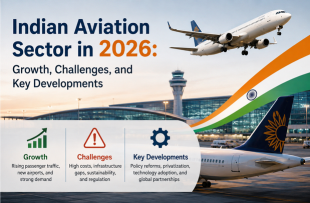
India’s aviation industry continues to be one of the fastest-growing aviation markets in the world. In 2026, the sector is witnessing a mix of expansion, infrastructure development, sustainability initiatives, and operational challenges. From new airports and airline fleet expansion to fuel-cost pressures and safety concerns, Indian aviation remains a dynamic and closely watched industry.
India’s aviation market is expected to maintain strong long-term growth driven by rising disposable incomes, increasing domestic travel demand, and government support for regional connectivity. Industry projections indicate that India will require more than 2,200 aircraft by 2042, highlighting the enormous growth potential of the sector. Domestic passenger traffic continues to rise, making India one of the world’s largest aviation markets.
The government’s UDAN (Ude Desh Ka Aam Nagrik) scheme continues to boost connectivity to smaller cities and underserved regions. Recent developments include the launch of commercial operations at Daman Airport and proposals for additional airports in West Bengal, including a second airport near Kolkata and new facilities in Purulia, Balurghat, and Malda. These projects are expected to improve regional connectivity and stimulate local economic growth.
Indian airlines are actively expanding their fleets and route networks. Akasa Air recently announced plans to increase its capacity by approximately 30% during the current financial year and expects significant growth in international operations. The airline is also preparing to expand its fleet despite ongoing aircraft delivery challenges.
Meanwhile, airlines are increasingly deploying long-range narrow-body aircraft to connect secondary Indian cities directly with international destinations, reducing dependence on major hub airports.
While Air India continues its transformation under the Tata Group, the airline has encountered several operational headwinds. The carrier has temporarily reduced some international services due to fleet and operational constraints. The company has also strengthened its leadership team by appointing former Civil Aviation Secretary Pradeep Singh Kharola as an advisor to its chairman.
The airline’s modernization efforts remain a key focus as it seeks to compete more effectively on both domestic and international routes.
One of the biggest challenges facing Indian airlines in 2026 has been rising Aviation Turbine Fuel (ATF) costs. To support the industry, the Government of India approved a ₹10,000 crore aviation fuel price stabilization support package. The initiative aims to help airlines manage volatility in fuel prices and maintain operational stability during periods of global uncertainty.
Sustainability has become a major focus area for India’s aviation industry. Experts at recent industry conferences emphasized the need for easier adoption pathways, supportive policies, and improved economics for Sustainable Aviation Fuel (SAF). As airlines worldwide work toward reducing carbon emissions, India is increasingly exploring SAF as part of its long-term aviation strategy.
The Ministry of Civil Aviation continues to improve passenger services through digital initiatives. Digi Yatra has crossed 10 crore usages across 38 airports, reflecting growing acceptance of contactless airport travel. Additionally, the Passenger Assistance Control Room (PACR), established to help travelers during disruptions, has reportedly resolved more than 73,000 passenger issues with a success rate of approximately 98 percent.
Despite its strong growth trajectory, the Indian aviation sector faces several challenges:
Addressing these issues will be essential for sustaining growth and maintaining passenger confidence.
The Indian aviation industry is entering a crucial phase of development. New airports, expanding airline fleets, improved regional connectivity, and digital innovations are creating significant opportunities. At the same time, airlines must navigate fuel-price volatility, capacity constraints, and sustainability requirements.
If current growth trends continue and infrastructure investments remain on track, India is well positioned to become one of the world’s most influential aviation markets over the next decade. The developments seen in 2026 are laying the foundation for the next chapter of India’s aviation success story.